As higher education continues to evolve, online learning is no longer just an alternative — it is a critical pathway for expanding access, supporting diverse learners and preparing the next generation of engineers. In the Ira A. Fulton Schools of Engineering at Arizona State University, that vision has come to life with the graduation of the first cohort from the online bachelor’s degree in biomedical engineering through the School of Biological and Health Systems Engineering, part of the Fulton Schools.
Launched in the fall of 2023, the program was designed to make a rigorous biomedical engineering education accessible to students balancing careers, families, health challenges and geographic constraints. Since then, the program has grown to more than 250 students eager to engage with a flexible, high-quality engineering education. Enrollment is expected to match campus immersion in the coming years.
The online biomedical engineering program mirrors the academic rigor of ASU’s on-campus experience while introducing flexible delivery, accelerated course formats and real-world application through project-based learning.
“Online education is not about lowering barriers to rigor — it’s about lowering barriers to access,” says David Brafman, associate director of academic excellence in the School of Biological and Health Systems Engineering. “This program allows students to pursue engineering at the highest level while continuing to work, care for families or navigate major life transitions. That accessibility is transformative — not just for students, but for the future of the field.”
Students complete coursework in accelerated sessions, engage in collaborative design experiences and participate in a capstone project grounded in real-world biomedical challenges, ensuring they graduate career-ready.
Designing better patient outcomes
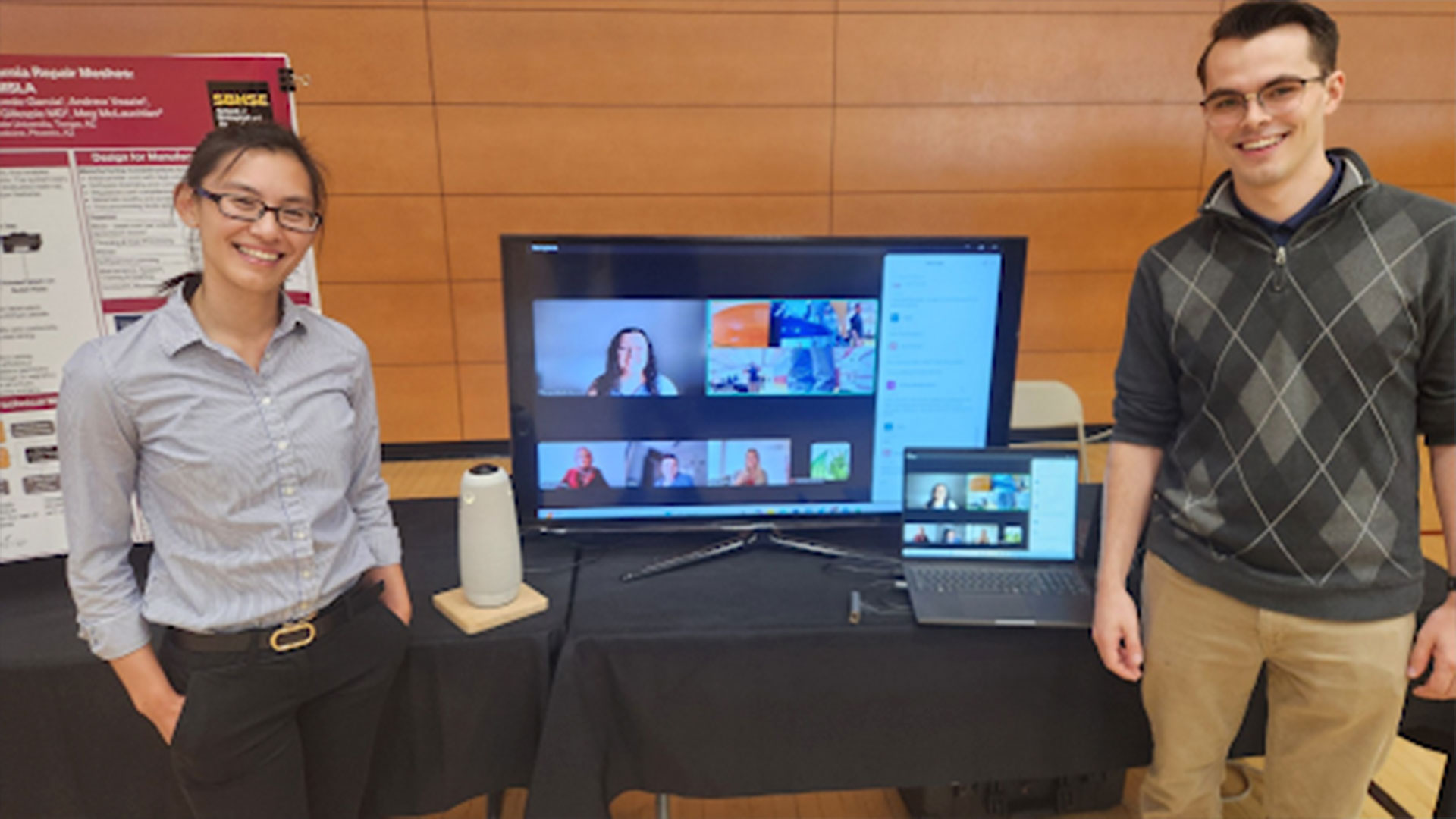
A defining feature of the program is its emphasis on applied learning. For the first graduating class, students worked on a shared capstone project focused on patient-specific, 3D-printed material to facilitate healing after hernia surgery, known as hernia repair meshes.
The project addresses a critical issue in health care: standard meshes often fail to match patient anatomy, leading to discomfort, complications and waste. By leveraging advanced manufacturing approaches, students explored ways to improve fit, reduce material waste and enhance outcomes.
“This project has shown me how engineering directly impacts real patients,” says online biomedical engineering graduate Alaa Alothman. “It’s not just theory — you’re balancing design, materials, safety, and real-world feasibility.”
Across the team, students emphasized how the experience strengthened their ability to translate classroom knowledge into practical solutions.
Shaping the future of biomedical engineering education
As the program grows, its impact extends beyond individual student success. It represents a broader shift in how demand for engineering education is delivered: one that prioritizes flexibility, inclusivity and real-world application.
“Programs like this are redefining what it means to deliver high-quality engineering education,” Brafman says. “We’re creating pathways that meet students where they are while ensuring they graduate with the skills, experiences and mindset needed to succeed in a rapidly evolving field.”
With strong enrollment growth and increasing alignment with industry needs, ASU’s online biomedical engineering program is positioned to become a national model for accessible, high-impact engineering education.
Prospective students can take the next step by attending an upcoming information webinar or requesting more information to explore how the program can fit their goals.
Meet the graduates
Alaa Alothman — Arlington, Virginia
Balancing travel, relocation and major life transitions, Alothman leveraged the flexibility of ASU’s online program to stay on track. Originally taking classes in-person, she transitioned to online to continue her degree while moving across states and managing significant life changes.
“I didn’t want to lose progress or change my academic plan,” she says. “The online format allowed me to continue learning with the same high-quality coursework no matter where I was living.”
After graduation, she plans to pursue a career in medical technology and health care innovation, with a focus on improving accessibility and patient care.
Theodore “Teddy” Cavender — Chandler, Arizona
Theodore Cavender’s drive for building and problem-solving has been an asset in his efforts as an engineer and entrepreneur. The online format allowed him to continue working in product development and startup environments while advancing his education.
“There’s definitely a sense of pride in being part of something new,” he says. “We’re helping shape a path that future students will follow.”
Moving forward, he plans to continue growing his company and expanding into biomedical technologies, simulations and regenerative medicine.
Tran Finn — Tucson, Arizona
Tran Finn balanced life as a small business owner and parenthood while completing the program. The flexibility of the online format allowed her to continue her education while raising a young child.
“The accelerated format helped me stay focused and move through the program with a clear, intentional path to graduation,” she says.
In the future, she plans to work at the intersection of biomechanics, medical device design and patient-centered innovation.
Theresa Salcedo-Garcia — Dallas, Texas
Theresa Salcedo-Garcia transitioned to the online program after health challenges made in-person attendance difficult. The program’s flexibility enabled her to progress in her degree while working full-time.
“Growing up around engineering and initially considering medical school, biomedical engineering felt like the perfect intersection,” she says. “The online format made it possible for me to keep pursuing that path.”
She plans to pursue a master’s degree in computer science while continuing her career in biomedical engineering.
Andrew Veazie — Chandler, Arizona
Balancing careers in accounting and music, Andrew Veazie transitioned to the online program after getting married and beginning full-time work. The program’s flexibility enabled him to complete his degree while managing multiple professional commitments.
“One of the biggest lessons I learned is that you can’t do this program alone,” he says. “Building connections with classmates makes all the difference.”
After graduation, he plans to continue developing his business while exploring opportunities in software and network engineering.
India Zappia — Phoenix, Arizona
India Zappia transitioned into biomedical engineering after initially pursuing a path toward medical school. While working full-time, she embraced the online format to continue her education while gaining real-world experience.
“The online format gave me the opportunity to take a co-op in Indiana and work on real medical device solutions,” Zappia says. “That experience has been invaluable for my growth as an engineer.”
She plans to continue her career in medical device research and development, building on both academic and industry experience.