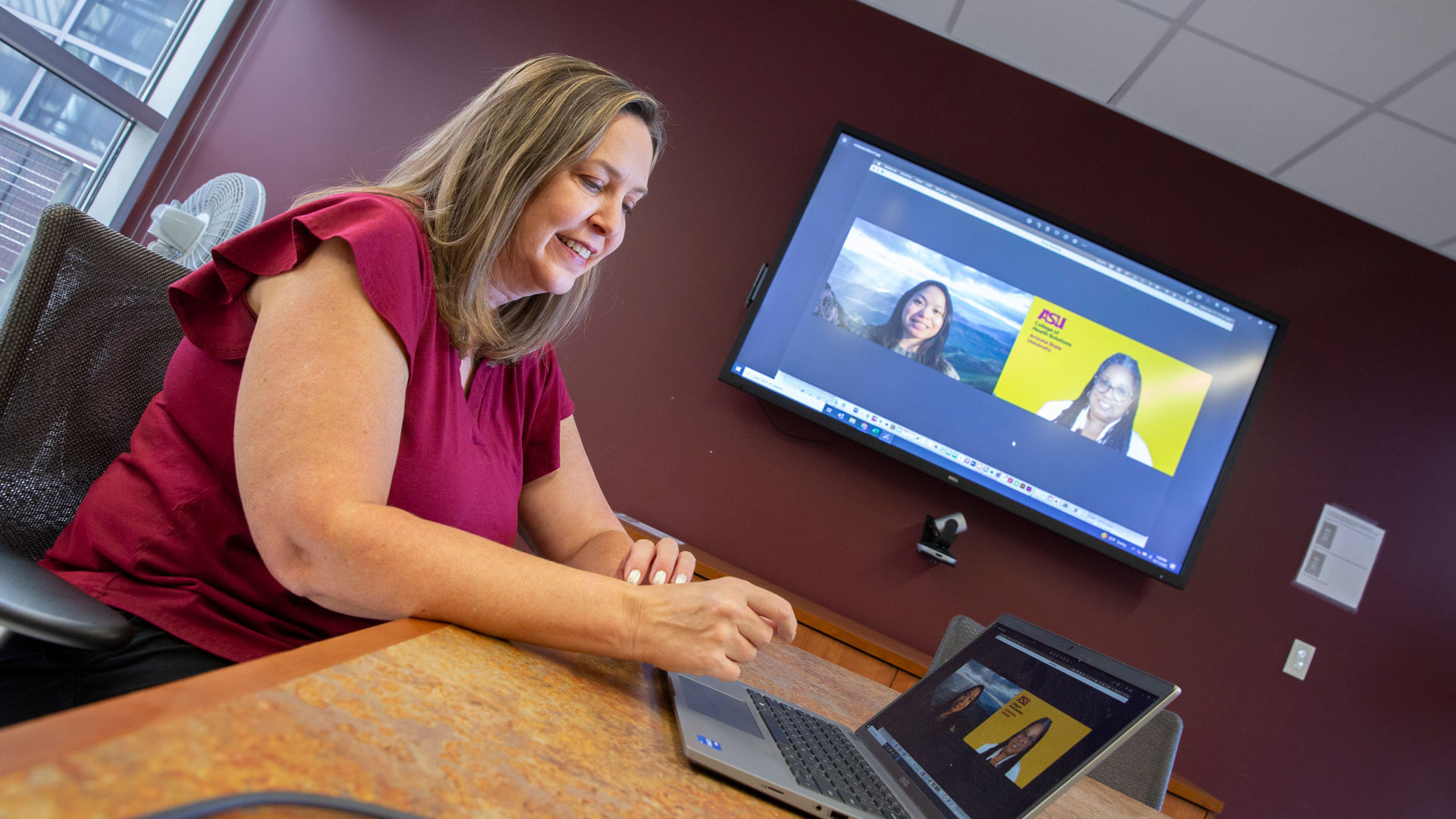
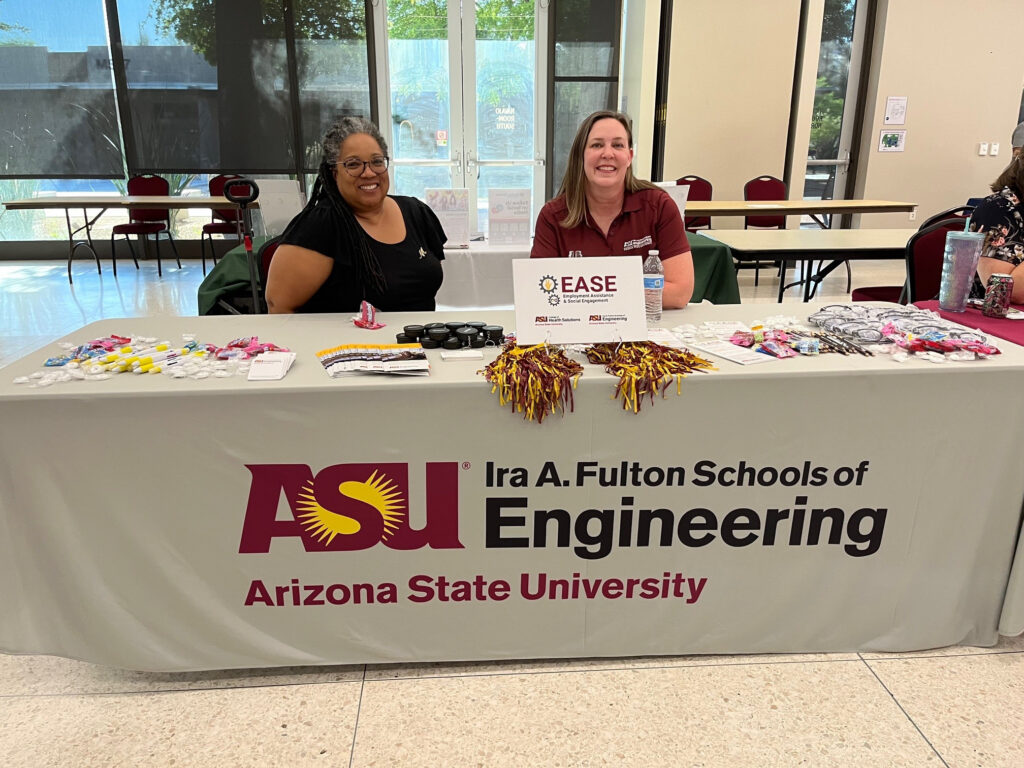
Education doesn’t start or stop at the classroom door, and neither do the efforts to improve access to engineering education. At Arizona State University, the Employment Assistance and Social Engagement, or EASE, program supports neurodivergent students by building workforce readiness and engaging learning environments across every facet of student life.
Based in the Ira A. Fulton Schools of Engineering at ASU, EASE provides individualized support to students and contributes to a broader National Science Foundation-funded collaboration with the Autism Self-Advocacy Center for Equity & Neurodiversity in Engineering, or A-SCENE, a multi-university research effort focused on how engineering programs can better serve a wider range of learners.
Co-founded by Deana Delp, an associate teaching professor of engineering in the Fulton Schools, and Maria Dixon, a clinical professor in the College of Health Solutions at ASU, the program provides personalized student support with research-backed strategies that can influence engineering education at scale.
“Every student’s learning style is different because neurodivergence presents differently in everybody,” Delp says. “Individual connection and care with students can be the difference that helps a student reach graduation.”
Taking a personalized and holistic approach to student success
The EASE program works directly with neurodivergent students to identify effective learning strategies and areas for growth throughout their education. Students actively participate in shaping the techniques that support their academic progress.
“Because EASE is an individualized program, we’re able to identify each student’s learning style and help them maximize what works best for them,” Dixon says. “Mentors are trained to recognize different learning styles and to introduce strategies that students can try and build into their approach.”
A defining feature of EASE is its dual-mentor model, wherein each student is paired with two mentors: one from the Fulton Schools and another from the speech-language pathology, or SLP, program in the College of Health Solutions.
“The Fulton Schools mentor brings insight into what it’s like to be an engineering student,” Dixon says, “while the SLP mentor brings expertise in communication, helping students navigate the classroom and college environment to maximize participation and build connections and friendships.”
This tailored support is especially relevant in engineering, where coursework often requires engagement with material across lectures, labs and collaborative projects. By helping students refine their learning, EASE supports persistence in rigorous degree programs.
The result is a more holistic support system that addresses both academic and interpersonal aspects of student success.
Establishing systemic support
EASE operates in tandem with the broader ecosystem of student support at ASU, including Student Accessibility and Inclusive Learning Services, or SAILS. While EASE provides school-level, discipline-specific guidance, the university-wide program offers resources that ensure students have access to accommodations and support services across campus.
Dixon and Delp say that a key goal for EASE is to improve student outcomes as they reach graduation and secure employment.
“By pairing the specific support these students need with the more generalized assistance provided by SAILS, ASU offers targeted support that works toward student success in college and retention through graduation,” Dixon says.
On a national scale, ASU is contributing to A-SCENE’s goal of developing a neurodiversity in engineering playbook that any university can use to outline how engineering programs can better support diverse learning needs and improve student outcomes. EASE’s involvement includes translating practical insights into research questions and generating data that inform broader change. By studying approaches such as individualized mentoring, cross-disciplinary collaboration and skill-building strategies, the A-SCENE project aims to identify scalable practices for engineering programs across the country.
ASU’s involvement in these initiatives has also made it eligible for an Autism-Inclusive Campus Designation from the College Autism Network. The designation will certify the university as a community that strives to create and maintain environments that ensure the inclusion and success of autistic and other neurodivergent people — including students, faculty and staff — in all aspects of their community and mission.
Supporting impact beyond the classroom
As ASU continues its work with A-SCENE, insights generated through EASE will contribute to a growing body of research on engineering education and student success. Dixon and Delp say the effects of EASE can be observed beyond academic performance. EASE student mentors, such as engineering undergraduate Baron Guido, describe the program as a space where students develop confidence, refine goals and navigate the broader challenges of college life.
“EASE provides an outlet for students to express struggles they have about all the things they experience in college life,” Guido says. “We make sure they maintain a healthy lifestyle and stay motivated and on the right track for success.”
In one instance, Guido worked with a student who was uncertain about their academic path. Through mentorship, the student aligned coursework with personal interests and long-term goals, reflecting the program’s emphasis on academic and career development.
The program’s long-term goal is to better understand how structured support systems improve retention, degree completion and workforce readiness, and to share those findings with institutions nationwide.
By connecting student support with collaborative research, the Fulton Schools is helping shape the future of engineering education to recognize varied learning approaches while maintaining a strong focus on academic excellence and career preparation.