
An international research and cultural immersion project for graduate students pursuing research in civil, environmental and construction engineering at U.S. universities strengthened students’ soft skills and expanded global research partnerships for faculty members in the Ira A. Fulton Schools of Engineering at Arizona State University.
The study was designed and led by David Grau, the Sundt Construction Professor, and Samuel Ariaratnam, the Sunstate Chair of Construction Management and Engineering, who are faculty members in the Del E. Webb School of Construction within the School of Sustainable Engineering and the Built Environment, part of the Fulton Schools.
“Our motivation was to bridge the gap between academic preparation and the demands of globalized research, as well as enhance students’ skills essential for success in today’s interconnected world,” Grau says about the project supported by an International Research Experiences for Students, or IRES, grant from the National Science Foundation, or NSF.

This NSF IRES grant provides a pathway for graduate engineering students who are U.S. citizens or permanent residents to gain a global perspective by covering the costs of international and domestic travel, visa fees and accommodations for a period of up to one semester.
International research opportunities like this expand ASU’s global footprint while supporting students’ personal and professional growth.
“The program directly supports ASU’s global engagement strategy by establishing research collaborations across continents, increasing ASU’s visibility in international academic and industry forums and creating pathways for student and faculty exchanges,” Grau says. “These efforts contribute to positioning ASU as a leader in global engineering education and research.”
Nurturing these critically important international connections is a priority for Grau and Ariaratnam who travel four times a year to universities around the world to meet with colleagues, students and research collaborators.
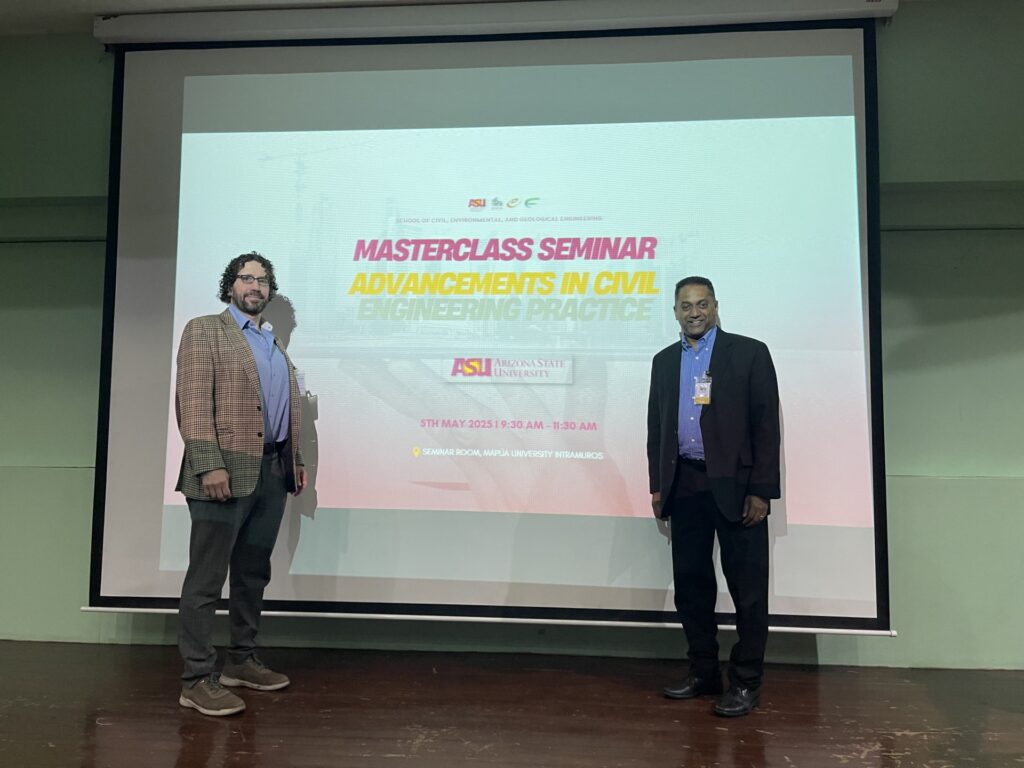
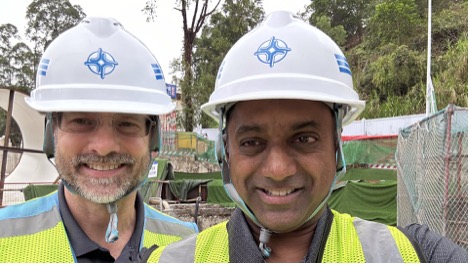
In the past year, Ariaratnam and Grau presented seminars on advances in civil engineering and visited with faculty members and students at universities in Australia, Singapore, Malaysia, Cambodia, Vietnam, the Philippines, Chile, Peru, Colombia, Nepal and Oman.
“We currently have plans to visit several universities in Saudi Arabia, Japan and South Korea in 2026, fostering international relationships between ASU and civil, construction and environmental engineering institutions and companies around the world,” Ariaratnam says.
Training and research yield results
The participating students from across the U.S. received professional training and development provided by the American Society of Civil Engineers, or ASCE, before their international flights.
“Every student selected to participate attended a local ASCE meeting and completed the online Engineering Ethics course offered by ASCE,” says Ariaratnam, who serves as president of the Utility Engineering and Surveying Institute, part of ASCE.
Each student was matched with a host university, based on their dissertation topic and existing research collaborations with faculty members in civil, construction and environmental engineering across Australia, Europe, Southeast Asia, South America, North America, the Middle East and Nepal, with a total of 19 university hosts.
“Participating students conducted research at universities in Canada, Australia, Chile, China, Denmark, Germany, India, Nepal, Norway, Paraguay, Portugal and South Africa,” Grau says. “For the students, the collaborations provided access to advanced laboratories, unique datasets and research methodologies as well as diverse perspectives, accelerating research innovation in a global context and offering students unparalleled learning opportunities.”
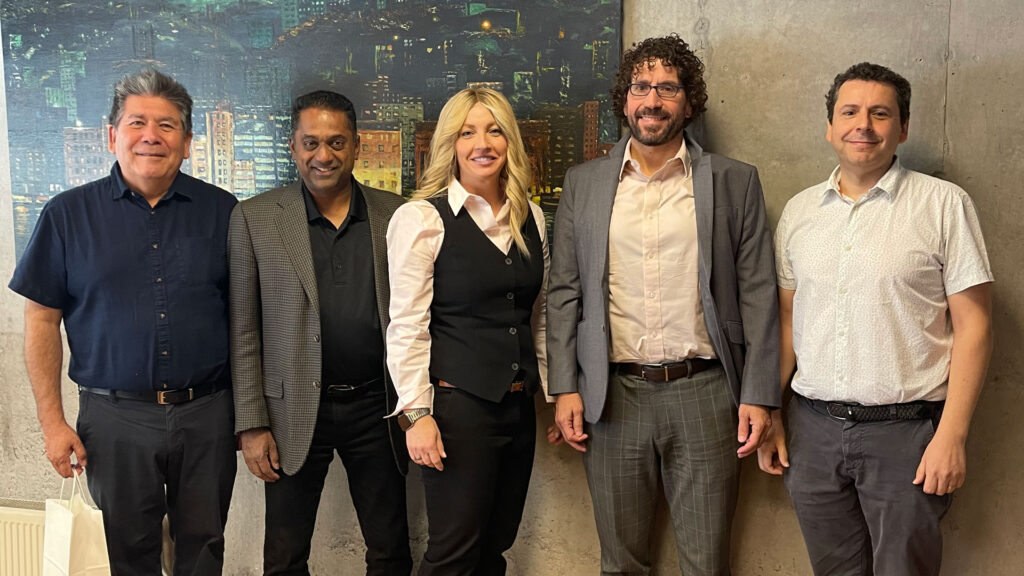
For two months, students collaborated on research while engaging with global experts, researchers, faculty members and peers at their host institutions. These sustained connections and research-group partnerships resulted in co-authored publications, shared datasets, new grant proposals, industry engagement and conference presentations delivered both abroad and upon their return to the U.S.
“These connections extend beyond the program, fostering long-term academic and professional networks that enrich research quality and innovation,” Grau says.
As part of the project, Grau and Ariaratnam assessed changes in participants’ collaboration, adaptability and leadership skills to understand how international research experiences impact graduate students’ development.
Results indicated that participants gained measurable improvements in skills, including a 33% increase in networking skills, a 20% rise in self-confidence and a 15% improvement in research skills attributable to the international experience.
Interviews with the participating graduate students from across the U.S. highlighted what led to these positive outcomes. Students said meaningful advances in analytical thinking and creative problem-solving were achieved through navigating new research environments and adapting to different academic cultures and methodologies.
Students also reported increased personal maturity and independence, saying that managing daily life in another country while conducting complex, collaborative research required more resilience, adaptability and self-reliance than at home.
“The results of the study provide evidence that well-framed international research experiences are transformative,” Grau says. “Students gain technical expertise while developing independence, resilience and cultural awareness.”
Experience opens a new career path for alumni
Participating in the project changed the career path for Nick Heier, who earned two master’s degrees in fall 2022 — one in construction management and the other in biomimicry.
Initially, Heier envisioned a career working with U.S.-based contractors. After his research experience at the University of Oslo in Norway, Heier has pursued an international career in civil engineering focused on sustainability challenges.

Heier says his international research experience opened doors to new industry partnerships.
Before publishing co-authored research with his mentor in Norway and collaborators in the U.S., Heier presented research at international conferences, engaged with industry partners seeking strategic guidance on piloting technologies and scaling innovations, and produced a commissioned piece for a client informed by insights gained during his international experience. Grau, who worked with Heier at ASU, says these experiences shaped his research and professional development.
Heier’s earlier research focused on broadly identifying barriers and drivers in innovation systems, but his experience in Norway helped him see critical leverage points at earlier stages, thus enabling a smoother transition from basic research to applied research and then to pilot demonstrations.
Since graduating from ASU, Heier has served as a part-time Biomimicry 3.8 project leader. He is working on his doctorate in engineering and the built environment at Griffith University in South East Queensland, Australia, conducting research on the impact of biomimicry on building and infrastructure projects to support Brisbane’s hosting of the 2032 Olympic Games.
Connections lead alumni to new opportunities
While Heier’s international experience shaped his early career, similar global connections have opened new opportunities for alumni at later stages of their professional journeys.
The professional relationships Jim Geisbush, P.E., made during his international research experience with Professor Baosong Ma in the civil engineering department at Sun Yat-sen University in Zhuhai, China, led him to return for conferences, presentations and opportunities to help engineers around the world address water pipeline needs. Geisbush was also invited to become an Honorary Fellow of the International Institute of Utility Specialists, headquartered in Hong Kong.
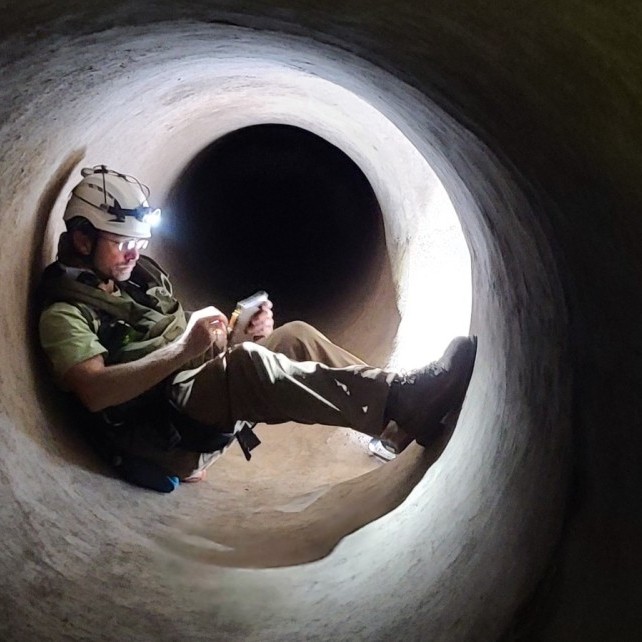
Geisbush was in his early 50s with more than 25 years of experience as a consulting engineer and a reliability engineer at the Central Arizona Project when he decided to pursue his doctorate with the goal of teaching when he retires. Under Ariaratnam’s guidance, he earned his doctorate in civil engineering at ASU with an emphasis on construction engineering methods for large-diameter water pipeline maintenance.
Most of Geisbush’s research was complete and he was finalizing his dissertation when he began working with Professor Ma, whose research focuses on trenchless technology and pipelines. Geisbush was already familiar with Ma through the International Conference on Pipelines and Trenchless Technology, which Ma organizes in China.
“I completed my dissertation on determining when the best time is to conduct maintenance on large diameter prestressed concrete pipes while at Sun Yat-sen University,” Geisbush says. “I presented to Dr. Ma’s research group my experiences as a reliability engineer, then spent several weeks touring China and presenting my research at water companies, pipeline companies and universities, meeting with pipeline inspection companies and even touring a couple of large diameter pipeline construction projects.”
The international research experience helped Geisbush further develop his professional network and showed him new ways of teaching, conducting research and interacting with students and professors from a different culture.
“I keep in touch with the professors and postdocs I met, and as a result, I have been able to work on journal articles with Dr. Ma’s research group and assist in their research,” says Geisbush, a licensed civil engineer in Arizona and California, a Board-Certified Pipeline Engineer for water and a member of the Board of Governors of the Utility Engineering and Survey Institute, part of the ASCE. “I cherish the relationships I developed and intend to maintain and strengthen them.”
Results and relationships strengthen global collaborations
This IRES project has also had a profound impact on Grau and Ariaratnam.
“For us, this experience underscored the immense value of human relationships and the importance of global collaborations,” Grau says. “We were warmly welcomed by both faculty and students at every school and university we visited. Our presentations took place in energized, dynamic environments where there was so much to share and even more to learn.”
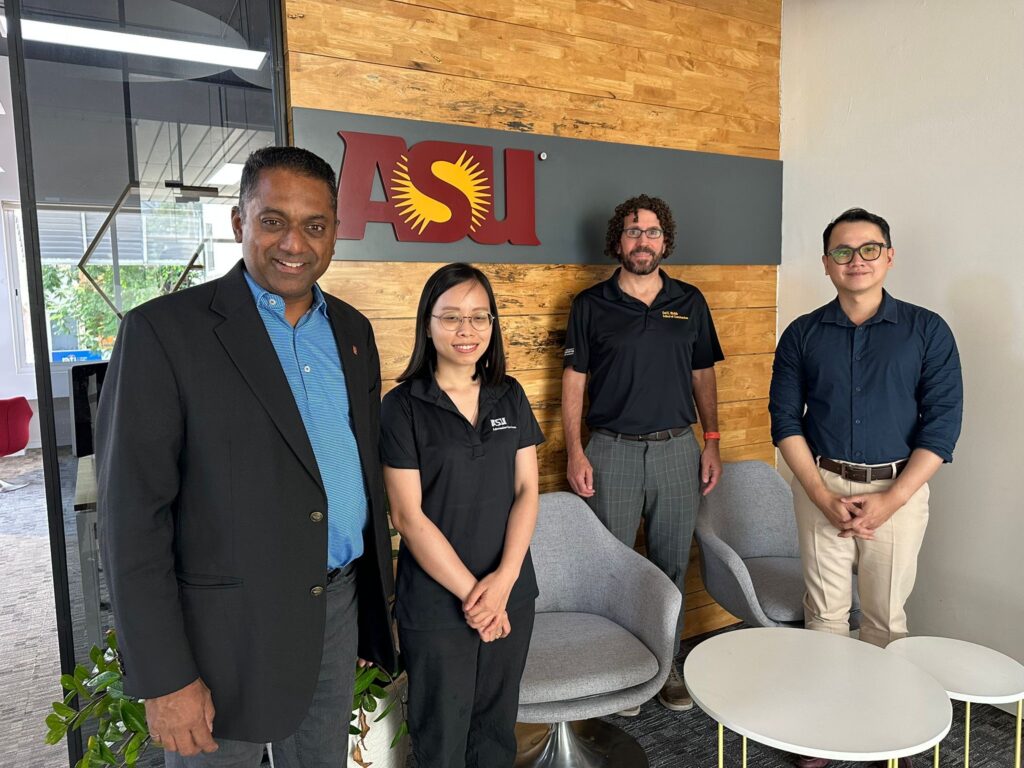
For example, their visit to Mapua University in the Philippines was entirely organized by the student leadership committee.
“There was a palpable sense of anticipation leading up to our visit and presentation,” Grau says. “Afterward, students eagerly approached us to connect, ask questions and seek advice about their future studies and careers. It was truly a thrilling and rewarding experience.”


