Some of the most impactful technologies in modern life didn’t start as commercial products.
The pacemaker. The internet. GPS. Even Gatorade. Each emerged not from corporate brainstorming sessions or venture-backed moonshots but from university research labs, places built to explore hard questions without demanding immediate payoff. Long before a technology is profitable, scalable or even fully understood, it is often a university that dares to dream it.
That model matters more than ever. Artificial intelligence, or AI, is reshaping work and decision-making. Cyber threats target hospitals, cities and elections. And as Americans live longer, many want to age at home, creating a need for technologies that support care, safety and independence. These are problems without quick fixes. They demand sustained, public-interest technology research — the kind universities are well equipped to deliver.
In the School of Computing and Augmented Intelligence, or SCAI, part of the Ira A. Fulton Schools of Engineering at Arizona State University, that work is accelerating.
Turning research into results
Within ASU’s $1 billion research enterprise, SCAI stands out as a hub for technology research that is both ambitious and deeply applied.
The school’s work spans AI, robotics, cybersecurity, advanced manufacturing and data-driven discovery. These are fields in which progress depends on sustained investment, specialized infrastructure and teams willing to tackle problems that do not come with ready solutions. This is research designed not just to push theory forward but to change how real systems are designed and deployed.
That momentum is reflected in new national benchmarks.
Each year, the Higher Education Research and Development Survey, or HERD Survey, from the U.S. National Science Foundation, or NSF, provides the most comprehensive accounting of research activity across U.S. universities. The survey tracks research expenditures, an indicator of how much work is happening in labs, classrooms and collaborative spaces.
In the most recent HERD rankings, SCAI’s research strength placed it:
- No. 6 in industrial and manufacturing engineering, ahead of Penn State, Purdue, Stanford and the University of Arizona.
- No. 11 in computer and information sciences, ahead of the University of Washington, Princeton and UCLA.
In fiscal year 2025, SCAI reported nearly $39 million in total research expenditures, including significant funding from the NSF. That investment supports faculty-led research, trains graduate students and enables projects that are too complex, too long-term or too publicly focused for industry to pursue alone.
Those rankings signal momentum, but they also invite a fair question: What does that investment actually do for people?
Ross Maciejewski, director of SCAI, offers a straightforward answer.
“Research dollars matter, but impact matters more,” Maciejewski says. “The public doesn’t just want to know how much research we do. They want to know how it benefits them. Our goal is technology research that improves lives, strengthens communities and solves real problems.”
Across SCAI, that philosophy shows up in projects designed to move technology out of the lab and into the world.

Robotics designed for real life
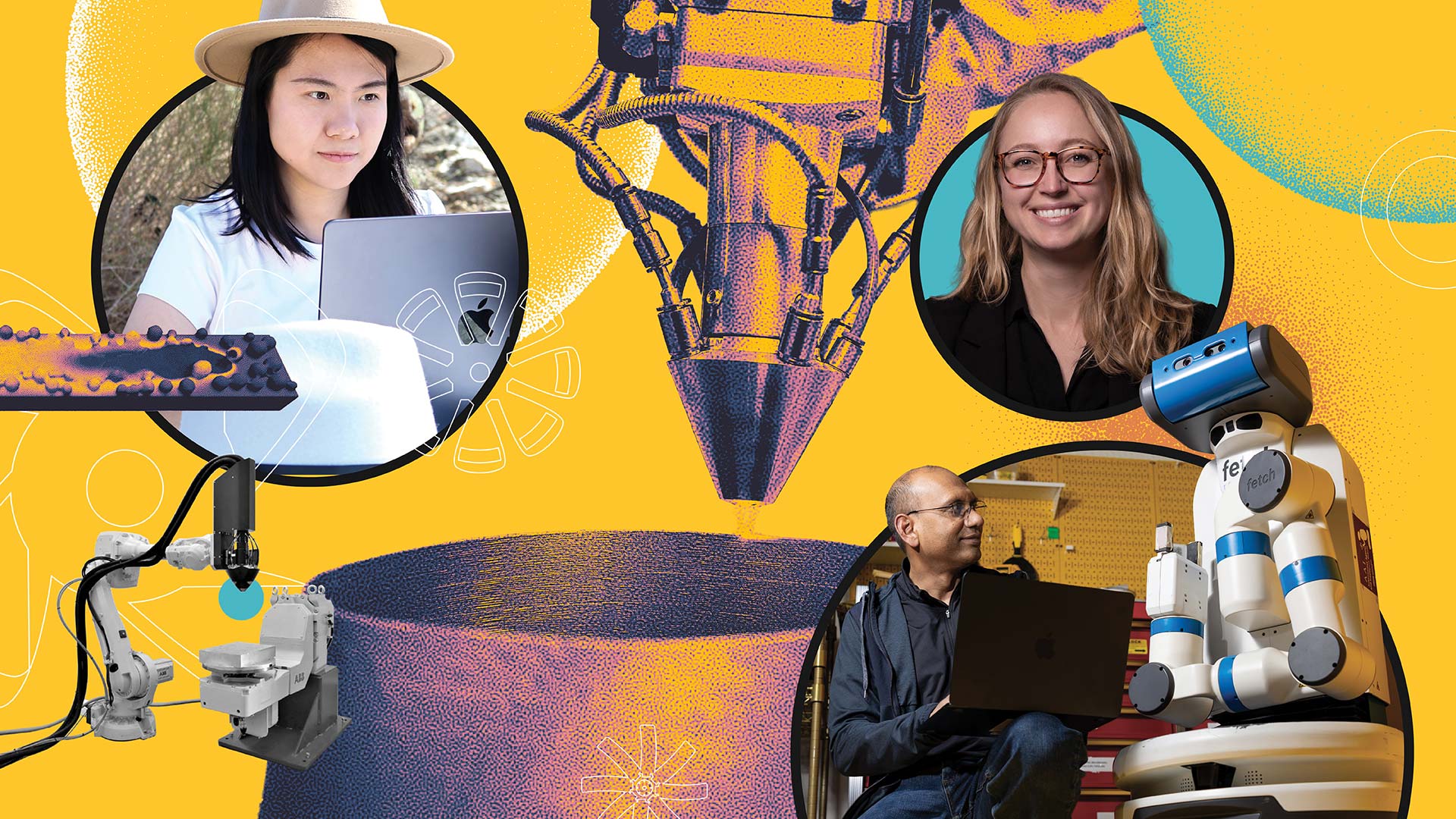
One promise of technology research is liberation: machines taking on the dirty, dull and dangerous tasks people would rather avoid. Siddharth Srivastava, a Fulton Schools associate professor of computer science and engineering, is working to make that promise real.
Backed by NSF funding, Srivastava’s research focuses on AI systems that enable robots to learn complex tasks on their own. That flexibility could unlock safer hospital cleaning, faster disaster response and more affordable household robots for Americans who want to remain at home as they age. By reducing the need for expert hand coding, the research lowers cost and expands access, turning robotics from a niche tool into a broadly useful technology.

From orbit to impact
Satellites collect staggering amounts of data. Turning that data into insight is the hard part. Supported by the NSF, Hannah Kerner is creating AI-powered tools that help people make sense of satellite data. Kerner is a Fulton Schools assistant professor of computer science and engineering, and her research allows users to track changes in land and agriculture across the globe, even in places where reliable data has been hard to come by.
The payoff is immediate and global: mapping croplands to improve food security, monitoring environmental change and delivering satellite insights directly to farmers and communities. By lowering technical barriers, Kerner’s work ensures that powerful technology doesn’t stay locked behind university walls. It gets used.

Cybersecurity before the breach
Cyberattacks rarely announce themselves. They slip through tiny flaws buried deep in software, moving faster than human defenders can keep up. The consequences are costly. In the U.S. alone, thousands of cybercrime complaints are filed every day, with reported financial losses reaching into the billions annually. Tiffany Bao is using technology research to help close that gap.
Bao is a Fulton Schools associate professor of computer science and engineering. With support from the NSF, she is developing SE-bot, an AI-powered system designed to mimic the intuition of elite cybersecurity experts. The tool learns how analysts prioritize threats and explores software paths strategically, uncovering vulnerabilities before attackers can exploit them. It is preventive technology research, focused on identifying weaknesses early and stopping harm before it spreads.

Reinventing how metal gets made
Technology research reshapes industry when it moves from theory to production. Ashif Iquebal, a Fulton Schools assistant professor of industrial engineering, and his team are using AI to tackle one of advanced manufacturing’s toughest challenges: reliably controlling how metal forms during 3D printing.
Supported by the NSF, the team is developing physics-informed AI models to guide the additive manufacturing of stainless steel. As a demonstration of real-world scale, the researchers are 3D printing a complex naval propeller, a part whose size, geometry and performance demands push current manufacturing methods to their limits.
The project shows how interdisciplinary technology research can strengthen industrial systems in aerospace, defense and energy, where precision is imperative.
Built long before it’s obvious
University Professor of Technology and Innovation Sethuraman Panchanathan, former director of the NSF and founding chair of SCAI, has spent decades watching new technologies move from uncertainty to ubiquity. He says the early stages of research are often misunderstood and undervalued.
“Technology research rarely looks revolutionary at the moment it begins,” Panchanathan says. “It often looks uncertain, and its potential for impact and return on investment may not be obvious. That is exactly why curiosity-driven, discovery-based, exploratory research should be led by universities.”
Funding milestones aren’t just indicators of growth. They’re evidence of sustained commitment to research that serves the public interest. In SCAI, that commitment takes the form of robots that reduce risk, AI that strengthens food systems, tools that defend digital infrastructure and manufacturing methods that push industry forward.
Technology research matters because it shapes the future before the future is ready. And in SCAI, that work is already underway.