
2025: Year in review
Engineering with purpose
Amid the rapid-fire attention economy of 2025, the faculty, staff and students of the Ira A. Fulton Schools of Engineering at Arizona State University remained focused on generating meaningful and durable impact at every scale of the communities they encountered.
While no single metric can capture the worth of an award, initiative or breakthrough, the collective scale of impact becomes visible when viewed across layers: student success, the state of Arizona, the nation, the globe and even beyond Earth’s atmosphere. Each accomplishment reflects the values of the Fulton Schools to innovate with purpose and show responsibility at scale.
The stories featured throughout 2025 on ASU Engineering News represent only a fraction of the ingenuity and effort produced by the Fulton Schools community. Together, they form a snapshot of progress in motion and a foundation for future impact that will continue to expand long after anyone is watching.
The Fulton Schools’ greatest contribution may not be what they have already built — but the expanding horizon of what they continue to make possible.

Students
Before engineers solve society’s most complex challenges, their first and most personal transformation happens long before their solutions reach the world. Before students change systems, industries or technologies, they must first grow into the people capable of leading that change.
At its smallest scale, impact begins with individual students gaining the skills, confidence and perspective to navigate new uncertainties. The Fulton Schools prioritizes creating opportunities for students to learn, upskill and succeed so they can chart their own careers beyond graduation.
As each graduate steps forward, the impact of student success expands outward, shaping not only professional outcomes but the future of engineering itself.

Fulton Schools resources drive semiconductor innovation and are molding the workforce that will advance the technologies of tomorrow.
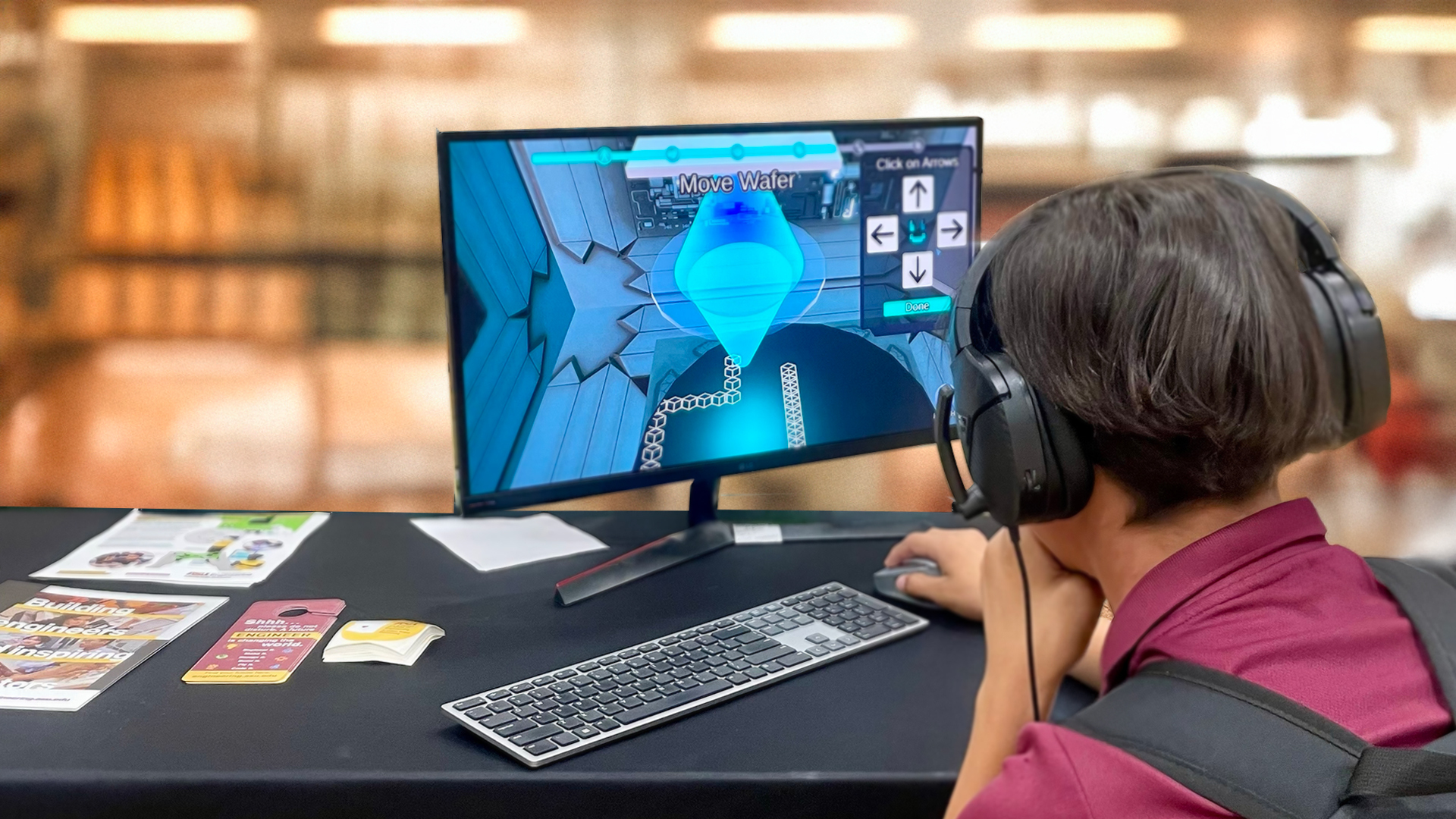
Immersive virtual reality, or VR, and artifical intelligence, or AI, tools are transforming advanced manufacturing education, increasing student awareness and readiness for advanced technical careers.

Investing in cross-disciplinary innovators
The National Institutes of Health is awarding ASU a $2.1 million grant to establish a doctoral regenerative medicine education program.

The Polytechnic School hits milestone mark at 10 years
The Polytechnic School, part of the Ira A. Fulton Schools of Engineering, celebrates 10 years of excellence, innovation and collaboration in engineering education.

Engineering global academic pathways
The Fulton Schools facilitates community engagement and resources that empower students to cultivate skills for global impact.

Aerospace meets asphalt ambition
ASU mechanical engineering student Isabella Robusto balances a stock car racing career with coursework.
Arizona
Formerly known as the “Territorial Normal School,” ASU has been part of the state’s story since before Arizona achieved statehood. That deep-rooted presence has shaped a responsibility to grow alongside the communities it serves, beyond campus boundaries or county lines.
Through the steady production of capable, forward-thinking graduates, the Fulton Schools has helped cultivate Arizona into a hub for innovation, entrepreneurship and industry leadership. By aligning education and research with regional needs, the Fulton Schools contributes to workforce development, economic vitality and solutions designed for the state by those who call it home.
As Arizona continues to evolve, the Fulton Schools remains positioned to scale local impact into long-term statewide resilience and opportunity.
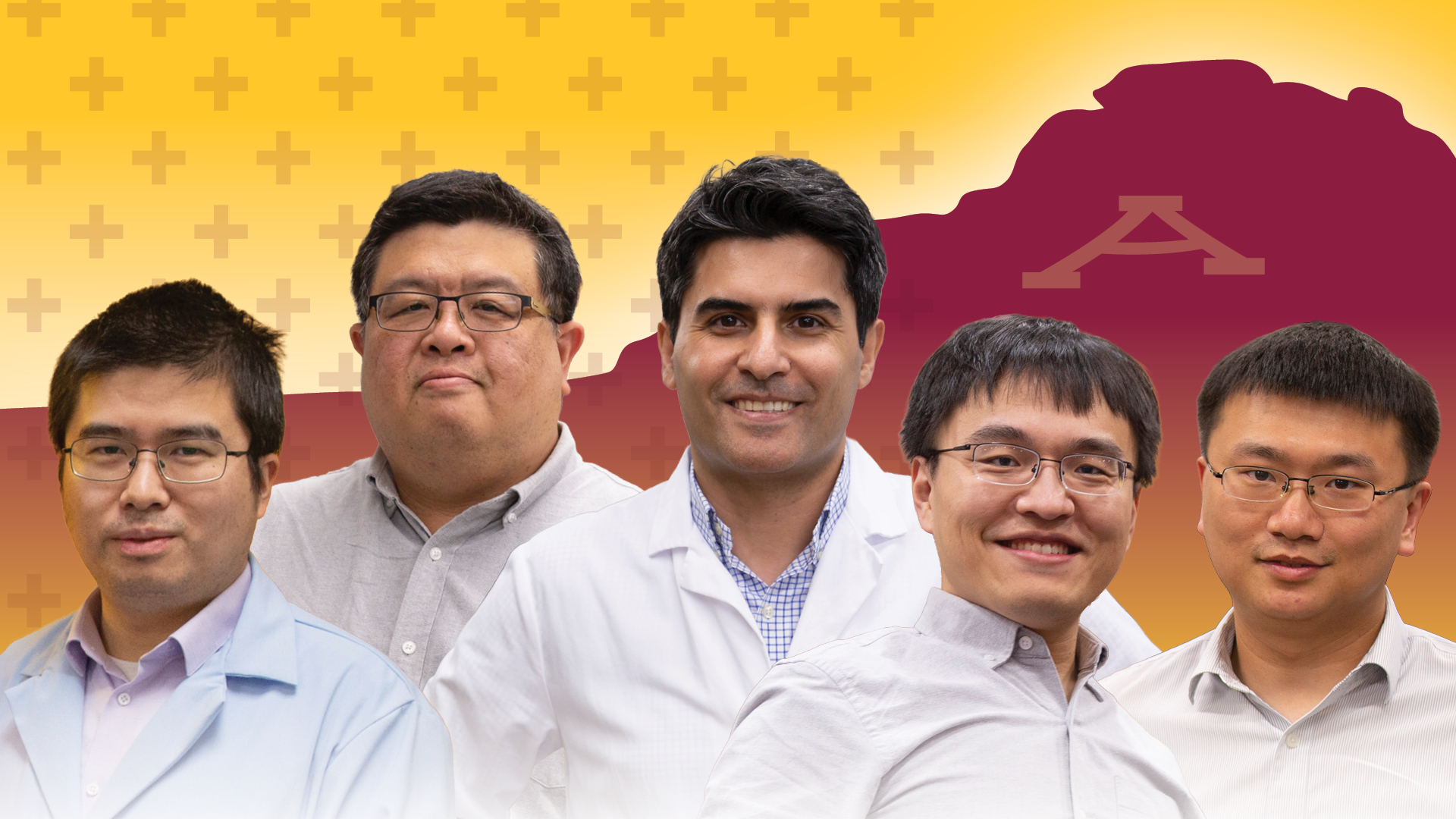
Five Fulton Schools researchers received grants from the Arizona Biomedical Research Centre to tackle medical challenges.

A Fulton Schools research project intends to help emergency responders predict and manage disaster scenarios.
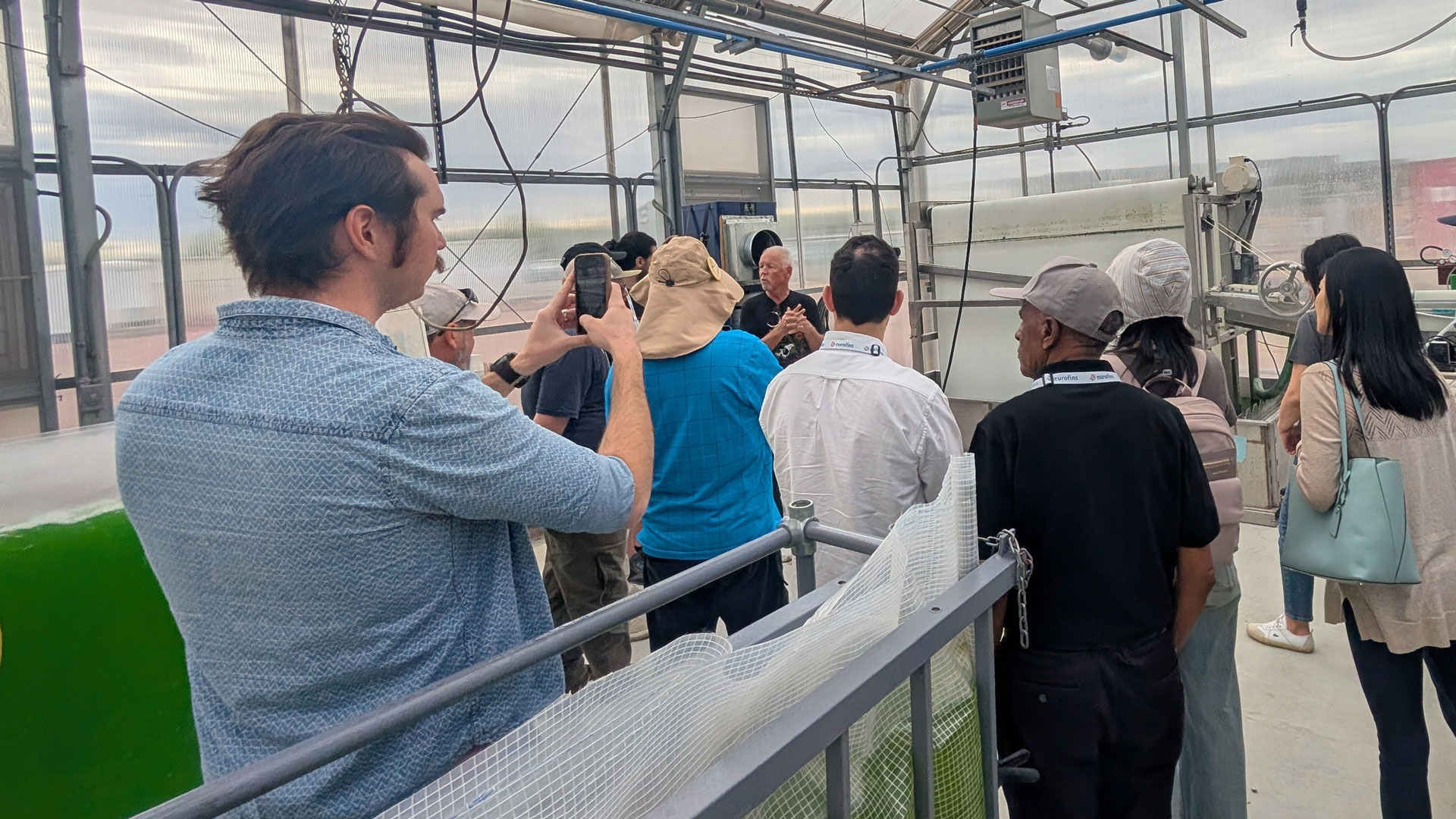
Research from the Arizona Center for Algae Technology and Innovation is helping set the stage for a productive clean energy bio-economy.

Transforming Arizona’s highways with innovative solutions
An ASU-led projects will reduce road repairs, predict actual drive time, manage roadside plants to cut wildfire risk and determine vehicle impact costs.

New interdisciplinary building forges academic, industry and community partnerships.
A new facility on the ASU Polytechnic campus will provide a learning and innovation space for students and the community.

AI in harmony with women’s health
A Phoenix-based startup taps a Fulton Schools computer science alumnus to develop a menopause coach powered by AI.
National
Beyond being part of the nation’s largest university, the Fulton Schools has earned distinction through the scale and consistency of its success. Its growth has demonstrated what a public engineering school can achieve when access, excellence and real-world relevance advance together.
The concentration of talent, infrastructure and research capacity within the Fulton Schools has enabled collaboration across government, industry and academia to produce work that informs national priorities and policy-relevant outcomes.
As national challenges grow more complex, the Fulton Schools is positioned to extend its influence by shaping solutions that scale across systems and sectors.

The largest U.S. manufacturer of semiconductor equipment and the Fulton Schools unite for advanced research projects.

ASU researchers lead efforts to create energy sovereignty in rural communities through hybrid microgrid development.

Leveling up manufacturing with virtual reality and AI
Immersive VR and AI tools are transforming advanced manufacturing education, increasing student readiness for advanced technical careers.

ASU team named winner in the American-Made 3D Solar Visibility Prize
A Fulton Schools team was named winner in the 3D Solar Visibility Prize for creating an AI-based tool supporting electricity grid modernization and the distribution of solar energy.

ASU researcher to streamline battery recycling
An ASU researcher received funding to mitigate energy insufficiency and boost the country’s energy security.

From homeland security hub to enduring legacy
An ASU-led consortium transformed academic research into real-world security solutions while preparing a generation of students to lead across government, industry and academia.
Global
Impact emerges on a global scale through the exchange of ideas and the ability to collaborate across differences. Exposure to new ways of thinking strengthens problem-solving and fosters engineers who are prepared to operate in interconnected systems.
The Fulton Schools draws faculty, staff and students from across the world, bringing together perspectives shaped by diverse cultures, environments and experiences. While their backgrounds may differ, the challenges they engage with — environmental issues, health, energy and security — transcend borders.
As global challenges intensify, the Fulton Schools’ ability to connect people and ideas positions it to contribute solutions with worldwide reach.

From Vellore to ASU: two degrees for clean energy impact
ASU and Vellore Institute of Technology offer new master’s degree options to advance clean energy innovation.

Finding the fields of the world
The Kerner Lab is using AI to improve food security and provide better tools for supply chain management.
Teaming up for tomorrow’s tech
The Fulton Schools and Indian government, academia and industry are working together to train the country’s engineering workforce and advance technology.

Ctrl + alt + compete: ASU coders head to world finals
An ASU competitive programming team competed in the International Collegiate Programming Contest World Finals in Azerbaijan.

ASU AI research drives road safety innovations
Fulton Schools faculty members create new tech and trainings to assist transportation planners from around the globe.

Seoul meets the Sun Devil spirit
ASU faculty and students are connecting with South Korea through research exchanges and conversations that inspire new ideas in technology and education.
Industry
Industry serves as the bridge between theoretical applications and reality. Many grandiose ideas have ambition and merit, but their capacity to be produced, used and embraced by users determines which projects gather dust and which become disruptors.
Through use-inspired research and long-term partnerships, the Fulton Schools aligns academic inquiry with real-world constraints, accelerating the path from laboratory insight to industrial application. This collaboration strengthens innovation pipelines, equips companies with emerging talent and ensures that research outcomes remain relevant in fast-moving markets. Rather than operating as a distant research entity, the Fulton Schools functions as an integrated partner in technological advancement.
As industries continue to evolve in response to global demands, the Fulton Schools is positioned to scale its influence by helping transform research into solutions that define what comes next.

ASU researcher Keng Hsu leads a U.S. Defense Advanced Research Projects Agency-funded project to overcome supply chain limitations and develop innovative production technologies.

The Fulton Schools and Intel have co-developed a framework for the company’s employees to learn the latest skills in semiconductor device physics and engineering.

DeepMIMO: The data foundation for wireless AI
ASU researchers are transforming wireless communication with NVIDIA and Remcom-powered simulations that make AI in wireless systems accessible to all.

ASU’s LEAPS lab marks a decade of energy impact
The Laboratory for Energy And Power Solutions, or LEAPS, is delivering energy and economic development through public- and private-sector collaborations in 20 countries, with more to come in the years ahead.

Civil engineering faculty members honored for foundational impact
The American Society of Civil Engineers honors Fulton Schools faculty members Ram Pendyala, Enrique Vivoni and Claudia Zapata for their contributions to the field of civil engineering.

Single-use or reusable cups? New project seeks answers
Fulton Schools researchers assess circular economy strategies with Yum! Brands to launch reusable cups.
Space
Rather than encouraging students to simply reach for the stars, the Fulton Schools challenges students to ask “Which one?” The Fulton Schools’ proven track record of rover launches and NASA collaboration position space exploration as another stage of the classroom for engineering at its farthest scale.
Engagement in space-related research and exploration demonstrates how ideas once considered impossible are merely untested. Work conducted beyond Earth’s atmosphere expands technological boundaries and imagination, showing students that impact is not limited by geography or gravity.
As humanity’s reach extends farther into space, the Fulton Schools continues to prepare engineers to carry purpose-driven innovation wherever exploration leads.

An ASU researcher earned a prestigious Air Force Young Investigator Award to advance the quality and sustainability of next-generation space power materials.

ASU researchers are developing solar devices to help sustainably and affordably power spacecraft.
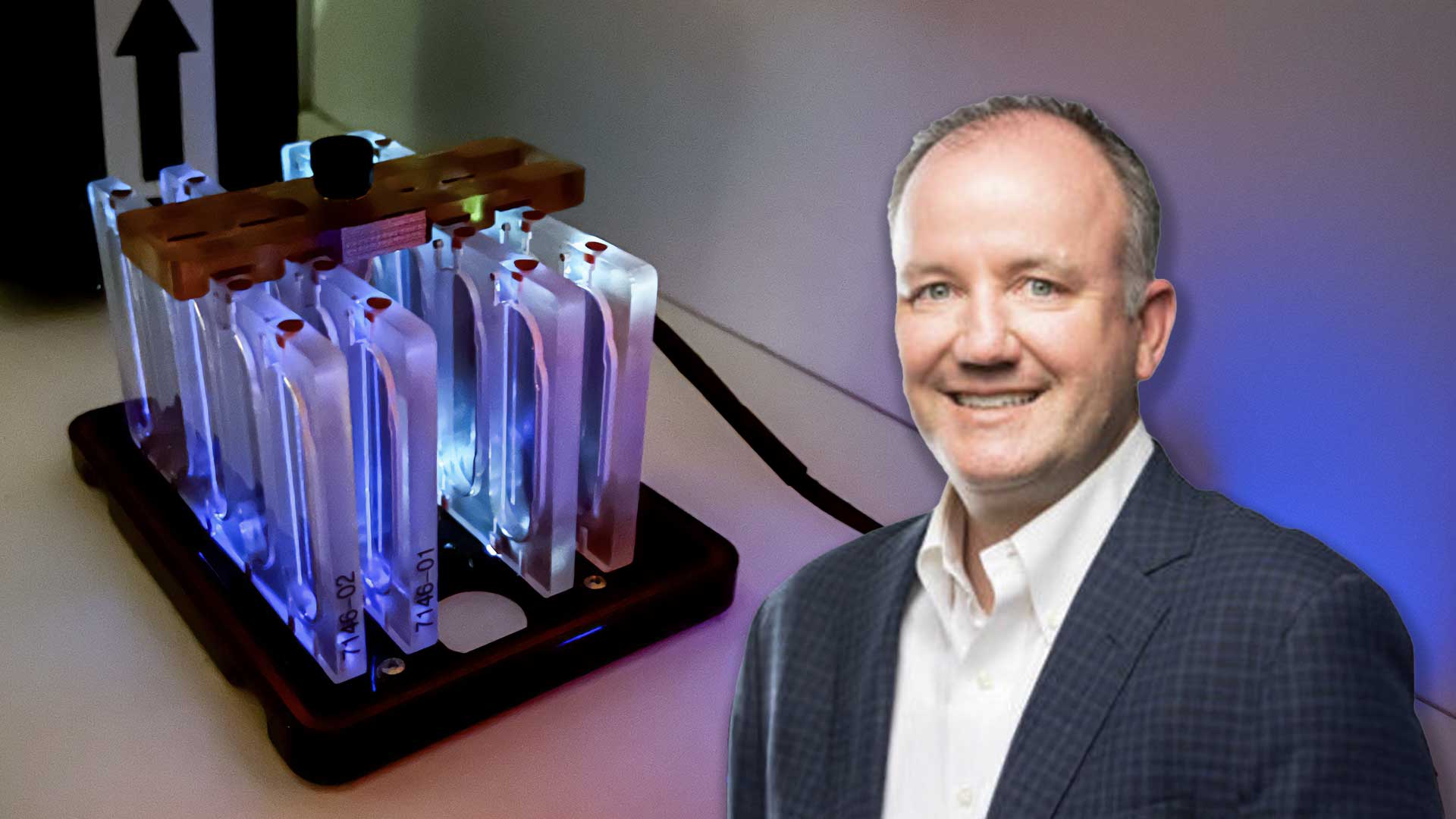
An ASU-led team tests germicidal ultraviolet light as a cost-effective, safer alternative to chemical disinfectants on the International Space Station.
Future
Innovation in the Fulton Schools is not a slogan but a standard and a commitment to building beyond what is known to pursue solutions that do not yet exist. Research, education and collaboration are guided by the understanding that the most consequential outcomes lie ahead, not behind.
By preparing engineers to think critically, act responsibly and adapt continuously, the Fulton Schools invests in futures that cannot yet be fully defined. Each breakthrough, graduate and partnership becomes a starting point rather than a conclusion.
Rather than capturing final answers, this work reveals new questions, opening pathways to innovations and solutions that have yet to be explored.

AI-guided care spans from space to the Sonoran Desert
ASU researchers Hasti Seifi and Pooyan Fazli are developing a VR headset for emergency medical assistance.

ASU researcher Yang Jiao discovers special state of matter
An ASU professor published a paper in the Proceedings of the National Academy of Sciences on a new exotic state of matter in quantum spin liquids.

ASU researcher unlocks novel way to control light at the nanoscale
Assistant Professor Sui Yang discovers a novel method to alter a material’s optical properties at the nanoscale using 3D printing.