Starting a new life chapter, such as a graduate degree, comes with a tidal wave of changes — especially when the scene is set in a different country.
For more than 60% of the graduate students in the Ira A. Fulton Schools of Engineering at Arizona State University, the first steps toward earning a graduate education involve filling out pages of visa paperwork and triple-checking airline websites.
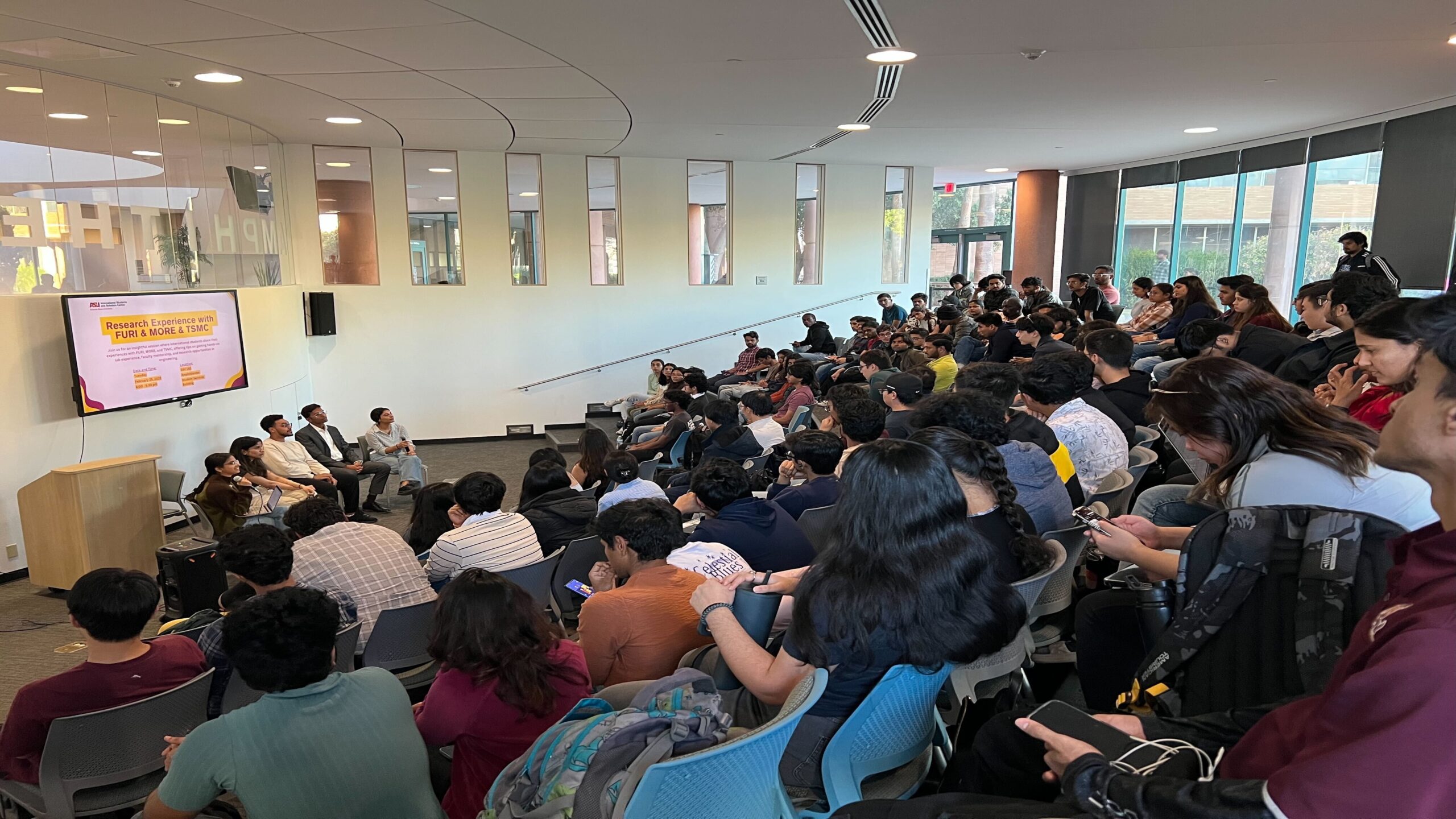
As an institution with one of the largest international student populations in the country, the Fulton Schools works hard to provide its students with the tools and resources needed to make such a huge transition feel easier. With programs like the ASU International Students and Scholars Center, or ISSC, which facilitates programming and dedicated staff liaisons like Ya Hu, a manager of the engineering student experience within ISSC, students are guided through every step of the process.
“Our goal is to help international students navigate campus resources and adjust to the culture — be it American, academic or just campus culture in general,” Hu says. “We help them build a community here as they develop their skill set and prepare to join the workforce.”
Hu’s role ensures that engineering students from around the globe have the resources, guidance and community needed to succeed academically and professionally. Her team facilitates programs that keep students connected to the university, each other and their academic goals.
“We are preparing the future global engineering workforce, whether they want to find a job here in the U.S. or anywhere in the world,” Hu says. “That starts with building a foundation for everyone to be successful.”
Culture shock
Adapting to a new country, culture and academic system is one of the most pressing challenges international students face. To ease that transition, the ISSC offers events like Feasting with Faculty, where professors share insights on U.S. academic norms and cultural expectations, and PhD Talks, which are monthly gatherings designed to address the distinct challenges doctoral students encounter.
The ISSC team recently launched a zero-credit graduate course that functions as an international version of the mandatory introductory undergraduate class, ASU 101 The ASU Experience. The new course is tailored to help engineering students acclimate to life in the U.S. through live sessions for those on campus and recorded online sessions for students stuck abroad due to visa delays.
“So far, we have around 90 students enrolled this semester,” Hu says. “Even if students defer, they can still join remotely and begin connecting with advisors, faculty and peers before they arrive on campus.”
Srividya Bansal, an associate professor and program chair of the software engineering program in the School of Computing and Augmented Intelligence, part of the Fulton Schools, and her husband, Ajay Bansal, a teaching professor and associate program chair of the software engineering program, came to the U.S. as graduate students decades ago. They both emphasize the importance of empathy during cultural adjustment.
“We understand the anxieties international students experience firsthand,” Ajay says. “From navigating airports when you arrive to finding food for your dietary restrictions to adapting to new classroom norms, there are a lot of steps to navigate that aren’t as clear as they seem.”
Ajay recalls watching students begin to process the scale of their commitment while volunteering to do airport pickups with the Indian Students’ Association before rideshare platforms streamlined the process.
“We would see how nervous students were when they arrived,” he says. “There is excitement, of course, but reality hits quickly. Having a welcoming community makes a big difference.”
Community building
ASU connects students with opportunities through workshops and advising sessions that demystify campus resources. Students learn about the opportunities available to them, including fellowships, scholarships, health services, on-campus employment and research.
Chinmayi Mysore Srinidhi, a data science, analytics and engineering graduate student and a student worker for the ISSC, notes the tangible outcomes of these efforts as she recalls one student who attended a workshop about securing on-campus employment.
“He started volunteering, which boosted his visibility and resume and eventually landed him a job,” Chinmayi says. “Later, he asked to return as a panelist for that same workshop to share his success with others.”
Hu says many of the seminars are centered around giving advice and helping students define their personal goals, which fosters a culture of mentorship.
“Many who benefit from our events later want to give back as mentors,” Hu says. “I get so many messages from students saying a certain event inspired them and even helped them secure an internship. It’s wonderful to see that cycle of support and success.”
For all the effort that staff and faculty supply, these initiatives are maintained and powered by the students who find joy and community in them.
The Engineering International Student Association hosts town halls, cultural events and networking opportunities to create spaces where students feel supported. Large cultural events, like the Ganesh Utsav Festival, draw in hundreds of attendees, underscoring the importance of community in helping students feel at home. From celebrating the Lunar New Year and Mid-Autumn Festival to hosting the annual Thanksgiving Gathering, the ISSC welcomes any opportunity for students to congregate and connect.

“These communities support mental and physical well-being, which directly impacts academic success,” Srividya says. “Students who feel connected perform better in their studies.”
Career preparation
For many international students, future employment opportunities drive their decision to study in the U.S. Career development programs, including resume and cover letter workshops, alumni panels and hiring events, all supporting their future job searches.
“Many students arrive with different resume formats and expectations,” Hu says. “We teach them how to adapt to U.S. norms so they can present themselves competitively.”
Critical to this preparation are training pathways like Curricular Practical Training, or CPT, and Optional Practical Training, or OPT, which allow international students to gain hands-on work experience in their fields. CPT provides work authorization for internships during academic study, and OPT grants up to one year of post-graduation employment authorization, with STEM, or science, technology, engineering and math, graduates eligible for a two-year extension.
Feedback from both programs’ attendees supports that these programs have proven invaluable. Students often follow up with Hu directly, sharing how her guidance led to internships or full-time positions.
“Most international students seek to build their careers here and advance the field of engineering,” Ajay says. “Helping them navigate career pathways not only reduces their anxiety but strengthens our engineering workforce.”
Fostering the future workforce
The Fulton Schools’ approach to international student support is holistic, blending cultural orientation, resource navigation, community building and career readiness. Patrick Phelan, Fulton Schools associate dean of graduate programs and a professor of mechanical and aerospace engineering in the School for Engineering of Matter, Transport and Energy, part of the Fulton Schools, says that adapting to meet student needs is nothing new for his team.
“Engineering is a rapidly evolving field, and we adapt to students’ needs in the same way,” Phelan says. “Our priority is to ensure our graduates remain well-rounded and competitive to become people who can succeed no matter where they end up.”
While administrators and faculty strive to create a community conducive to student success and global impact, the students’ commitment to engaging with resources and realizing their own potential is what sustains this ecosystem.
“Our goal is not just to welcome students but to help them thrive — academically, professionally and personally,” Hu says. “When they succeed, we all succeed.”