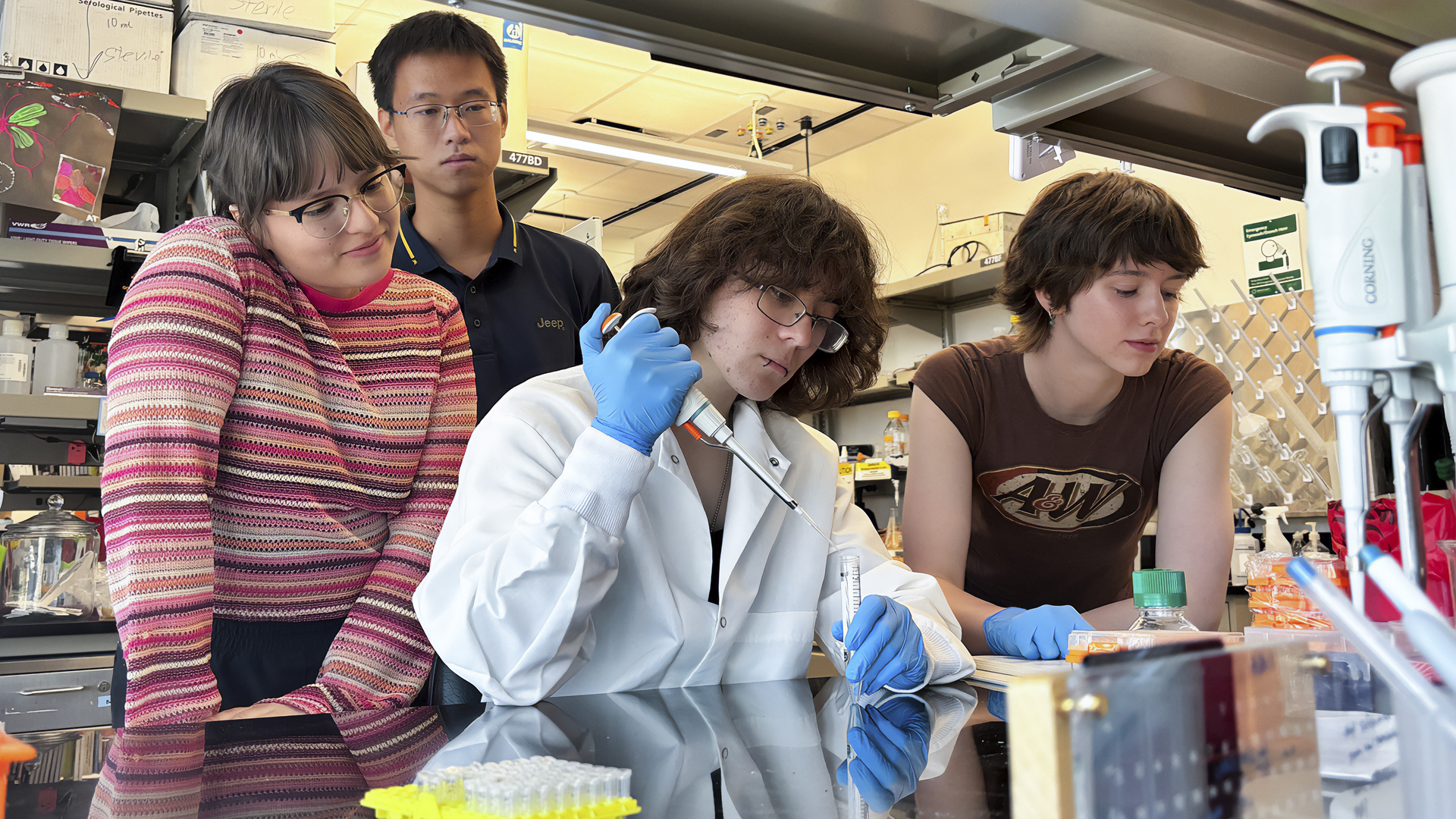
In DIYbio, a student organization that teaches the principles of synthetic biology to students from all academic disciplines, members know that great scientists aren’t born with tailored white coats and perfect pipetting technique.
The club serves as an accessible entry point for students of any classification or major to learn the fundamentals of synthetic biology through creative and collaborative projects.
“Many new members join knowing nothing about biology,” says Rori Hoover, president of DIYbio and a senior in biochemistry and data science. “But we can make a scientist out of anyone who wants to be one.”
Students involved in DIYbio gain access to ASU’s synthetic biology community and the resources it offers, as well as the chance to compete on a global stage in genetic engineering competitions.
“It’s a place where students can just learn by doing without a grade, and just for the fun of it,” Hoover says.
Where curiosity meets opportunity
Students may first encounter DIYbio through tabling, high school outreach efforts, career fairs or member presentations during ASU 101 BME The ASU Experience.
New members can join Open Lab, a subgroup within the organization, to learn practical lab skills in a collaborative, low-stress environment. Weekly meetings begin with the e-board members explaining each technique and its applications. Students then transition to the lab space with a partner and a worksheet, which Hoover says is designed to encourage critical thinking about each procedure.
“We have them talking through the process, not just following outlined steps,” Hoover says. “We ask them to consider ‘what might go wrong’ and ‘why,’ as if they are troubleshooting their own lab projects in real time.”
After one semester in Open Lab, students will have completed a genetic engineering experiment from start to finish.. Last year, students modified E.coli bacteria to produce carotenoid pigments, which produces the orange pigment in carrots.
Z Choy, a sophomore studying biological sciences and member of DIYbio, says it’s important to show others that science is an achievable feat.
“Restricting access only to those already studying the field would be a disservice to everyone eager to learn,” Choy says. “DIYbio is a community full of people who inspire curiosity, encourage questions, help you practice the skills you’re interested in and support you as you explore all aspects of doing science.”
Taking synthetic skills international
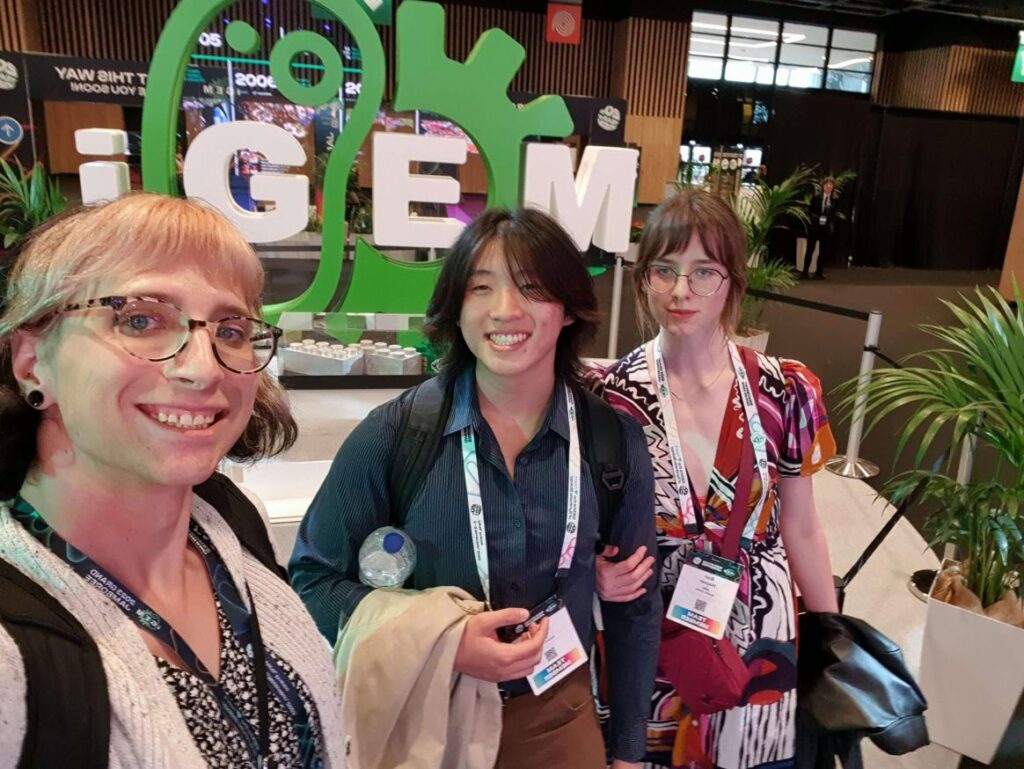
With skills learned in Open Lab, DIYbio members have the opportunity to compete in the International Genetically Engineered Machine, or iGEM, competition, an international showcase of student-led synthetic biology projects and innovation.
Each year, the ASU iGEM team tackles real-world problems and gains experience in everything from experimental design to science communication in a year-long project that they submit for the iGEM competition in Paris, France. In the past four years, the ASU team has earned two bronze and two gold rankings.
Benjamin Bartelle, the club’s faculty advisor, mentor and an assistant professor of biomedical engineering in the School of Biological and Health Systems Engineering, part of the Ira A. Fulton Schools of Engineering at Arizona State University, says that giving students the skills and opportunity to compete on a global stage has a lasting impact.
“Around 300 companies have spun out of iGEM since its inception and most of them are based in the U.S.,” Bartelle says. “Being an iGEM alum makes you a part of a huge network of talented people. This has led to internships, graduate school and job offers for our students, and I want to keep those opportunities available to ASU.”
Bartelle notes that the ASU team’s success is built on developing an enthusiastic, engaged and thoughtful team.
“Winning a medal comes down to teamwork,” Bartelle says. “We maintain a diverse team of people who are excited about everything from building a website to exploring the societal implications of the project, to engineering the biology. What let us win gold last year was choosing a theme and allowing everyone to play to their strengths.”
Join the movement
As they gear up for a new semester of science, biology and curiosity, Choy says new members should expect to hit the ground running during their weekly meetings.
“There will be a lot of new information and techniques, but also a lot of help understanding it all,” Choy says. “You’ll learn some basic lab skills and we’ll start working on our project for the semester.”
This year’s Open Lab cohort will learn to synthetically produce and dye spider silk. Hoover says they chose the project with the same guidelines they use for all of their design principles: to produce something visually engaging that signals to entry-level members they can succeed.
“It’s fun to bring new people into science,” Hoover says. “We get a lot of students from other majors who think that engineering is cool and just want to learn something new and I think that’s how it should be.”